
Haptimize ー
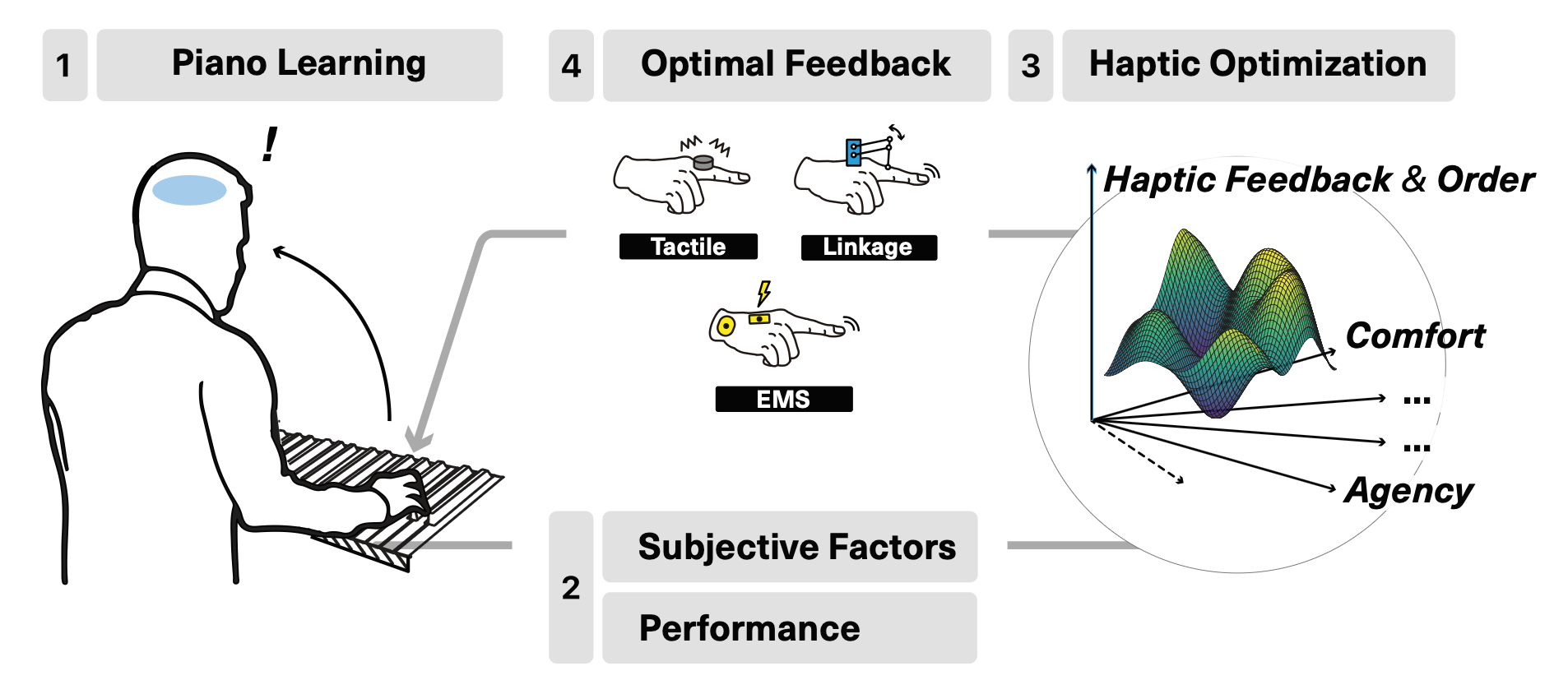
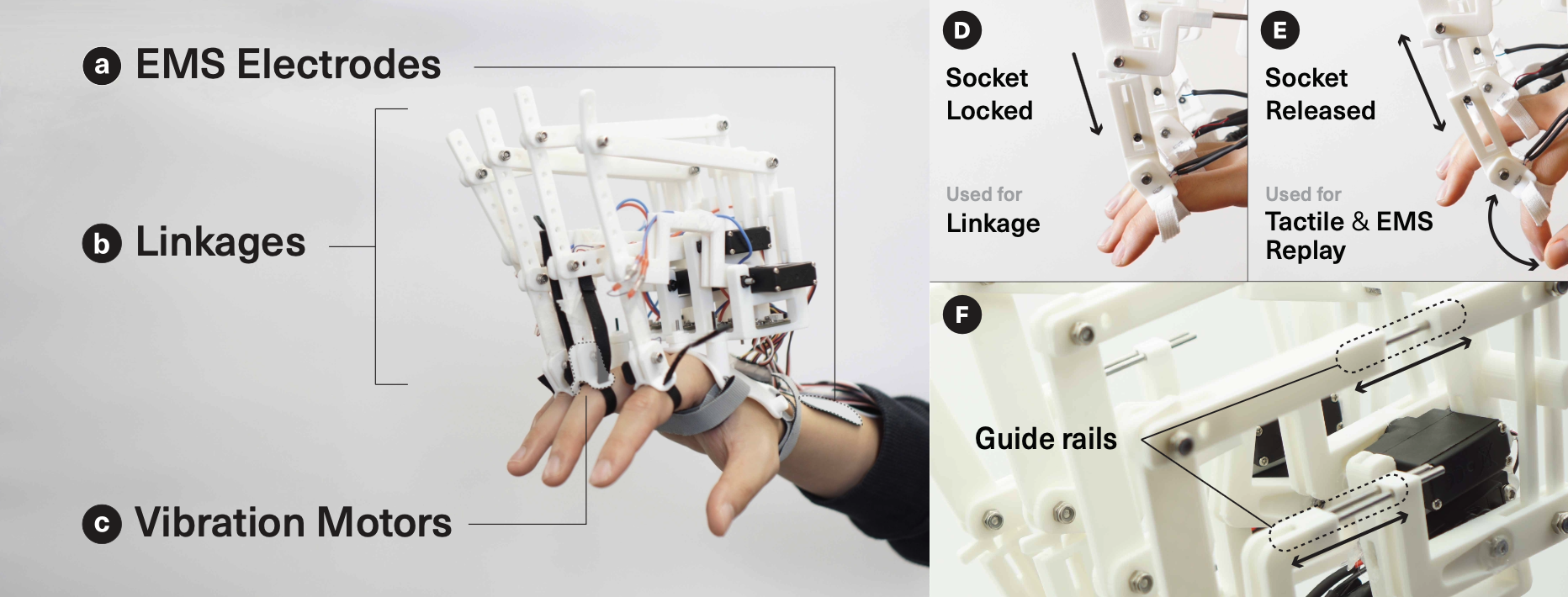
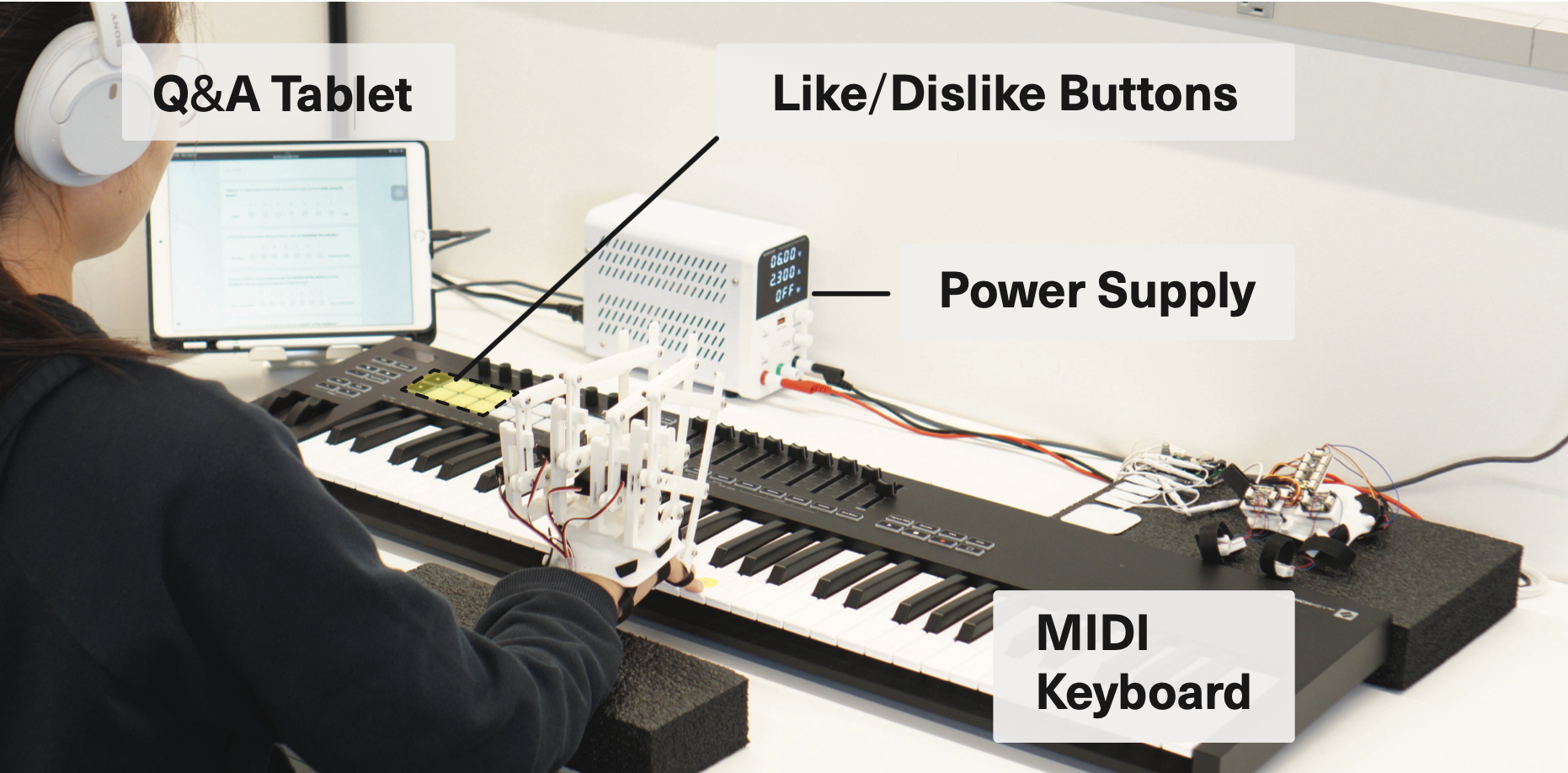
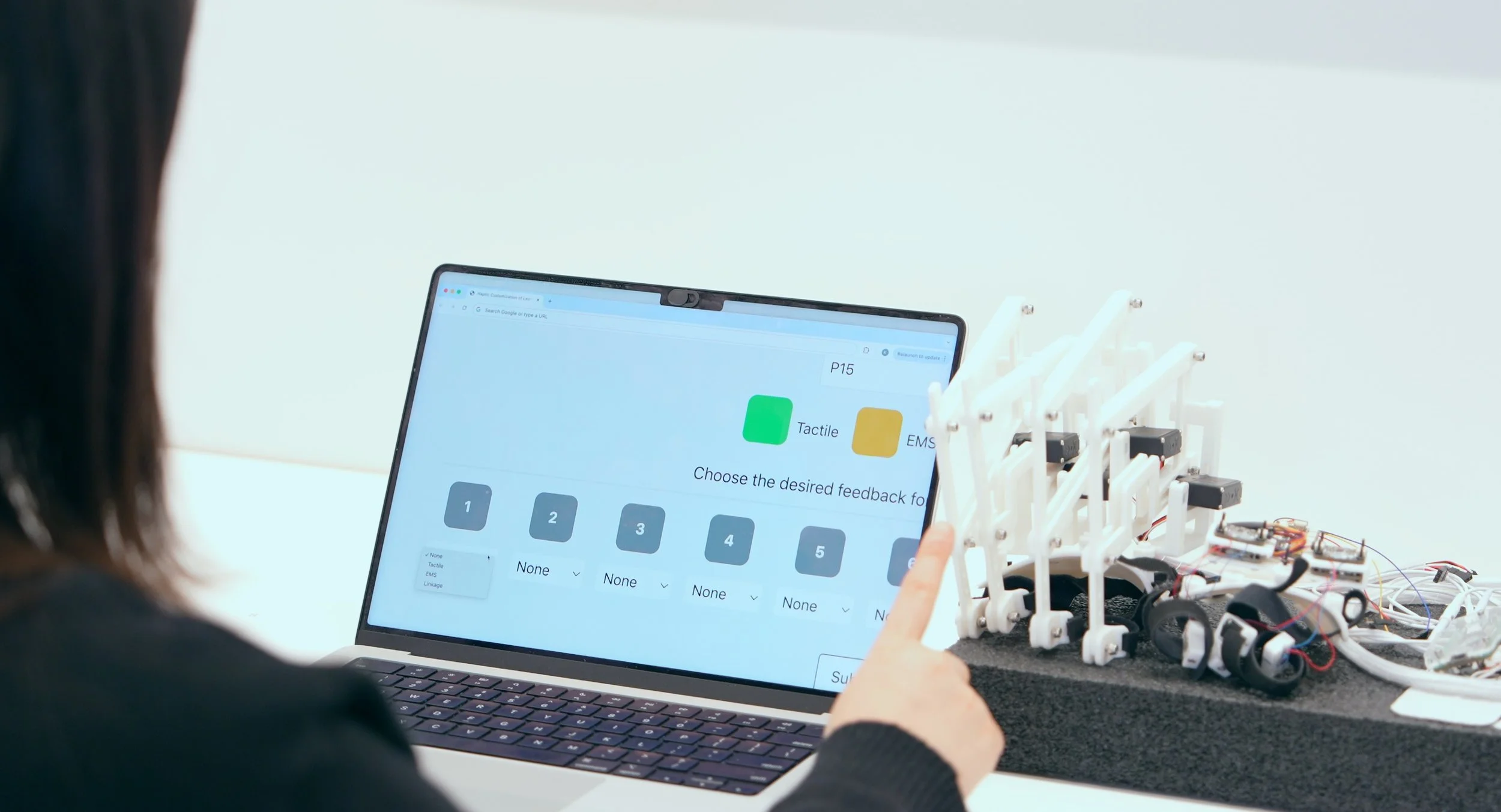
We explored how users experience motor learning with personalized multi-haptic feedback. To this end, we implemented Haptimize, a computational optimization system for the order and type of haptic feedback to be provided (EMS, vibrotactile, or exoskeleton) by jointly modeling objective performance and subjective factors (e.g., agency, effort, and confidence).
Haptimize supports two optimization modes: fully automatic optimization, which adapts feedback based solely on performance and subjective scores, and collaborative optimization, which additionally incorporates explicit user preference responses (i.e., Like/Dislike) during optimization. We prepared our approach using a reward–penalty–based optimization to dynamically select haptic modalities to provide. The computational model learns the optimal modality-selection policy by iteratively updating the expected reward of each state-action pair.
A user study (N=18) on a piano learning task showed that automatic optimization improved performance while collaborative optimization enhanced subjective experience, indicating complementary roles for the two modes.
Compared with prior manual customization, both computational modes achieved comparable learning performance while reducing configuration time from 48.5s to under 10s, making multi-haptic motor learning substantially more practical.
Kyungyeon Lee, Arnav Dadarya, Fumeng Yang, and Jun Nishida. 2026. Understanding Motor Learning Experiences with Personalized Multi-Haptic Feedback. In Proceedings of the 2026 IEEE International Conference on Systems, Man, and Cybernetics (SMC 2026).