ProtoCall ー
Mastering sequential skills is essential for everyday and professional tasks such as cooking and assembly. However, executing actions in the correct order and with appropriate timing remains challenging, particularly during transitions between consecutive steps. Existing approaches, including haptic guidance, error-based feedback, or post-error correction, either increase cognitive load, reduce users' agency, or intervene too late to prevent errors.
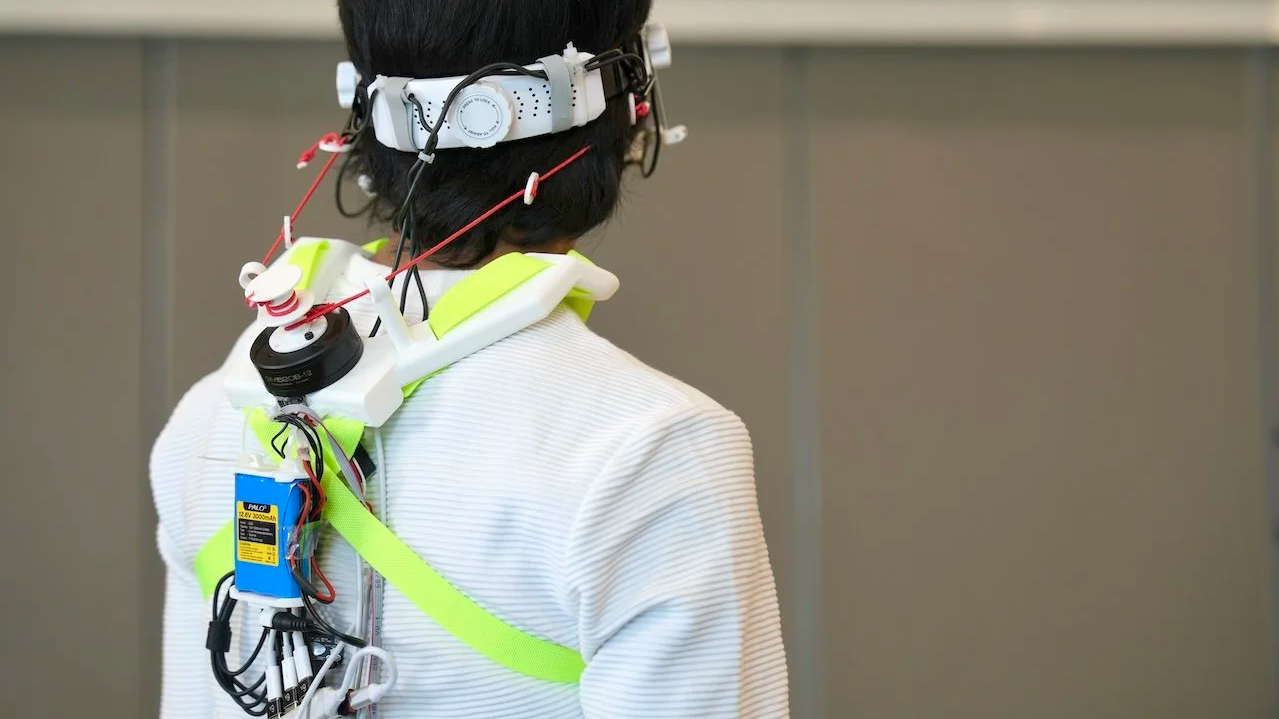
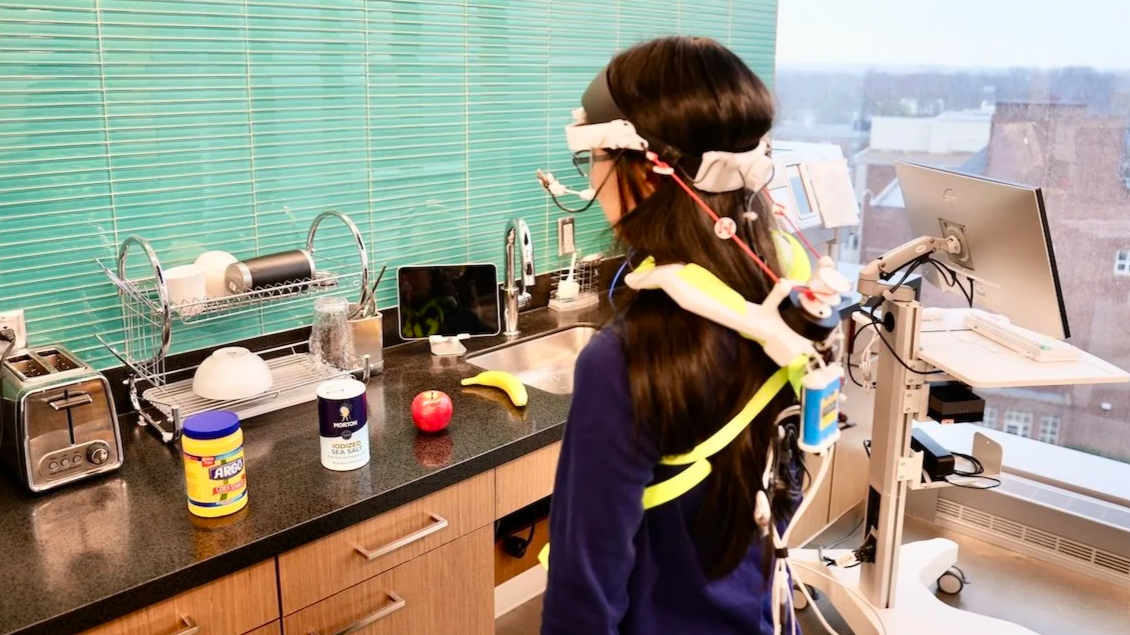
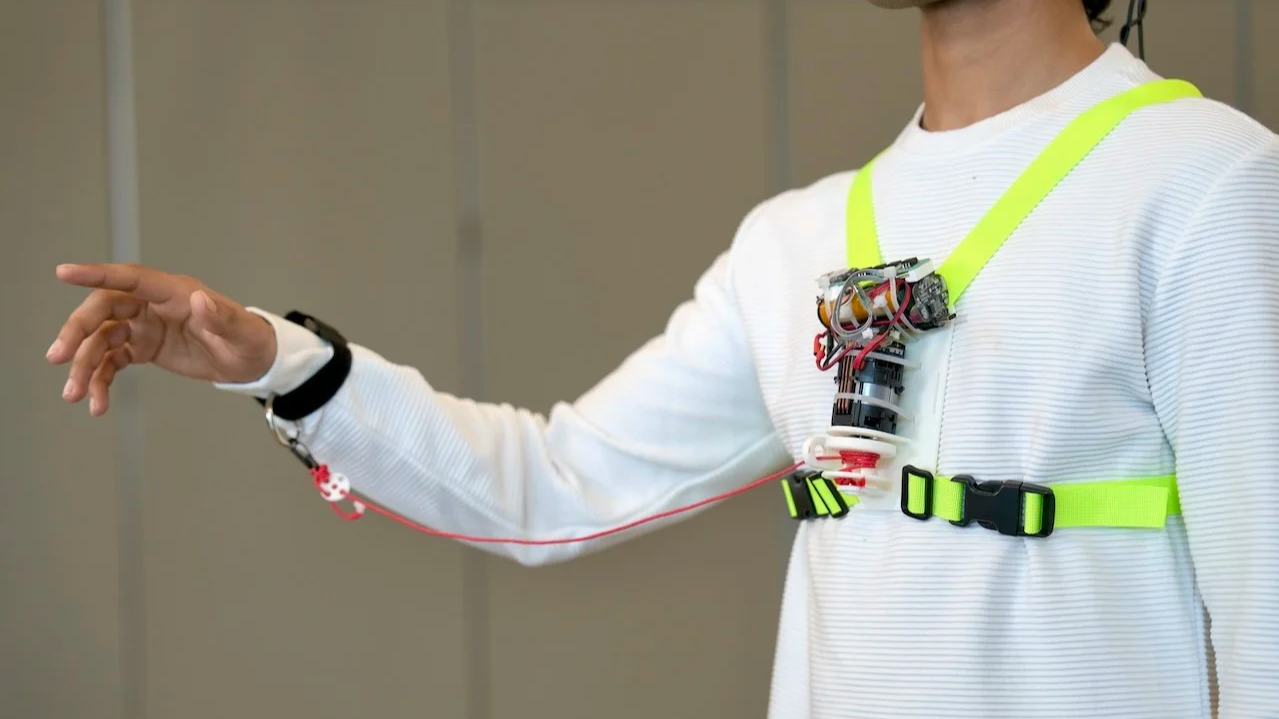
We developed ProtoCall, a custom wearable physical feedback system, combined with a Vision–Language Model (VLM) for interaction inference, and designed three feedback strategies targeting different stages of the error process:
1) preemptive attentional nudging (attention-level guidance by head actuation),
2) preemptive reaching nudging (action-level prevention of reaching), and
3) post-error nudging.
We conducted a user study with 16 participants on a sequential step-transition task, revealing trade-offs between physical feedback strategies across augmentation, retention, and user experience.
Kyungyeon Lee, Kirti Kishore, Adrien Ramsamy, Atsushi Kikumoto, and Jun Nishida. 2026. ProtoCall: Preemptive Physical Feedback for Sequential Skill Augmentation. In Proceedings of the 39th Annual ACM Symposium on User Interface Software and Technology (UIST '26). Association for Computing Machinery, New York, NY, USA, Article 234, 1–15. https://doi.org/10.1145/3830398.3830584
Kyungyeon Lee, Kirti Kishore, Tomona Oishi, Atsushi Kikumoto, and Jun Nishida. 2026. Demonstrating Preemptive Physical Feedback Strategies for Sequential Skill Learning: Fingers, Arms, and Heads. In Adjunct Proceedings of the 39th Annual ACM Symposium on User Interface Software and Technology (UIST Adjunct '26). Association for Computing Machinery, New York, NY, USA, Article 148, 1–4. https://doi.org/10.1145/3830397.3842448